-
-
|
 
|
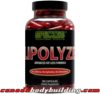
Species Nutrition Lypolyze Reviews
|
|
|
|
Reviews
|
Views
|
Date product posted
|
|
0
|
1100
|
Tue March 23, 2010
|
|
 |
|
Recommended By
|
Average Price
|
Average Rating
|
|
No recommendations
|
None indicated
|
None indicated
|
|
|
|
|
|
Description:
|
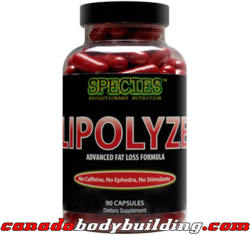
Lipolyze can be best categorized as a caloric wasting supplement. At SPECIES, we reject the premise that the only effective way to burn fat is to "stimulate" the body into action. While stimulants do increase metabolic rate, they also increase the production of catabolic (muscle-wasting) hormones.
Remember, the quantity of lean muscle in the body is highly correlated with the basal metabolic rate (BMR). Less muscle means a lower BMR! If stimulant-based fat burners are used to help shed unwanted body fat, there's a very good chance that, once they're discontinued, metabolic rate will significantly decrease and the predisposition to gain unwanted body fat will significantly increase.
Whats inside Lipolyze?
Usnic Acid
Inside all the cells of the body, ATP (adenosine triphosphate) serves as the fuel source that powers all daily activities. The majority of this ATP is produced when fats are oxidized (burnt up) inside the mitochondria (power station) of the muscle cell. Usnic acid is what's known in the field of biochemistry as an uncoupling agent. Derived from a simple plant lichen, Usnic acid "uncouples" or disconnects the ATP-producing machinery in the cell and "releases" all the potential energy that was supposed to be used to produce ATP. Due to the energy and ATP loss (which is dissipated as heat), the muscle cells must dig into stored body fat stores and oxidize additional fats to ensure that optimal energy levels are maintained.
The following analogy should help explain how Usnic acid exerts its energy-wasting effect in the human body. Imagine someone putting a hole in the gas tank of your automobile. The car would still perform at maximal capacity however, it would require a significant amount of additional fuel to travel the same distance it had prior to the punctured tank. Likewise, Usnic acid creates temporary "holes" in the mitochondrial membranes which then result in the loss of valuable "fuel" (ATP) from the "tank" (muscle cell). To combat this energy loss, additional fatty acids must be oxidized to ensure optimal performance levels.
Even more exciting is that fact that Usnic acid "wastes" calories without elevating blood pressure, without raising heart rate, and without causing any central nervous system stimulation. An individual can, literally, swallow a dose of Usnic acid, fall asleep, and start burning fat even while unconscious.
Individuals who consume 30-60mg of Usnic acid per day usually notice a slight increase in body temperature. This phenomenon is due to the fact that lost energy escapes from the body as heat. Remember, warmth is a good indicator that the Usnic acid is effectively wasting energy and thus burning fat.
Propionyl L-Carnitine
Inside the cells, L-carnitine transports long chain fats into the mitochondria (energy-producing chamber) where they are then oxidized into ATP. In theory, if we can increase the amount of L-carnitine within the muscle, we can theoretically increase the quantity of fatty acids that get oxidized. Until recently the problem has been that regular L-carnitine and even the more exotic acetyl-L-carnitine lacked the ability to penetrate skeletal muscle tissue (which is where most fat oxidation occurs). On the other hand, Propionyl-L-carnitine, a relatively new version of L-carnitine, has important effects on skeletal and cardiac muscle. Back in 1990, a human study suggested that propionyl-L-carnitine could combat the destructive effects of low oxygen status and muscle fatigue in heart and skeletal muscle. More relevant to our discussion is the fact that propionyl-L-carnitine has a tremendous ability to penetrate skeletal muscle and thus facilitate the transport of long chain fatty acids into the mitochondria.
Cyclic AMP
As we mentioned above, ATP (adenosine triphosphate) is the most important chemical energy source in all living cells. One of the chemical reaction products of ATP is the compound known as cyclic AMP (cAMP, or adenosine 3,5-monophosphate). In the cell, Cyclic AMP acts as an intracellular hormone, or second messenger. Once a cell's receptors are stimulated, it's the cAMP that propagates the message and ensures that the proper intracellular processes are performed. It's been repeatedly demonstrated that increased concentrations of cAMP can have 'total-body' effects whereby, in certain instances, levels of thyroid hormone (thyroxin) can significantly increase. As levels of thyroxin increase, metabolic rate also increases.
Guggulsterones
The thyroid gland releases a hormone known commonly as thyroxin (T4 for short). T4 is an inactive form of thyroid hormone that must ultimately be converted into triiodothyronine (T3), the active thyroid hormone. Whenever any sort of diet is initiated, the body's natural inclination is to slow down the conversion of T4 (inactive) to T3 (active). Ultimately, when this happens, metabolic rate slows and fat losses crawl to a halt.
In India, the Guggul is a tree which exudes a resinous sap out of incisions that are made in its bark. This resin has been used for centuries. This resinous sap can be processed, purified, and then standardized for its components Guggulsterones Z and Guggulsterones E. These two fractionations have the unique ability to support thyroid function by increasing the conversion of inactive T4 into active T3.
Green Tea Extract
Green Tea Extract (Camellia sinesis leaf) is a powerful antioxidant similar to vitamin C, vitamin E, and beta-carotene however, researchers have suggested that the ingredient called epigallocatechin gallate (EGCG) - may, amazingly, have antioxidant properties. A study from the American Journal of Clinical Nutrition suggested that green tea extract caused an increase in energy expenditure and fatty acid oxidation. The researchers noted an increase in 24-hour energy expenditure which actually translates to an increase in daytime thermogenesis.
|
|
|
|
|
-
-
-
Statistics

-
| Users |
12,495 |
| Products |
1,335 |
| Reviews |
211 |
| Views |
1,603,472 |
-
-
-
Random Products -
[Species Nutrition]
-
|