-
-
|
 
|
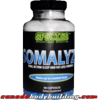
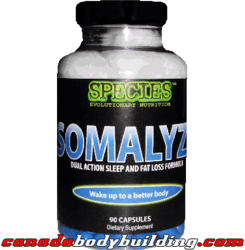
Species Nutrition Somalyze Reviews
|
|
|
|
Reviews
|
Views
|
Date product posted
|
|
0
|
985
|
Tue March 23, 2010
|
|
 |
|
Recommended By
|
Average Price
|
Average Rating
|
|
No recommendations
|
None indicated
|
None indicated
|
|
|
|
|
|
Description:
|
SOMALYZE is a non-stimulant based fat burner that, simultaneously, functions as a sleep aid. The following paragraphs describe the unique blend of ingredients in SOMALYZE and the complex mechanisms of how they function to metabolize fat while you sleep.
USNIC ACID Inside all the cells of the body, ATP (adenosine triphosphate) is the fuel source that powers all daily activities. The majority of this ATP is produced when fats are oxidized (burnt up) inside the mitochondria (power station) of the muscle cell. Usnic acid is what’s known in the field of biochemistry as an uncoupling agent. Derived from a simple plant lichen, Usnic acid “uncouples” or disconnects the ATP-producing machinery in the cell and “releases” all the potential energy that was supposed to be used to produce ATP. Due to the energy and ATP loss (which is dissipated as heat), the muscle cells must dig into stored body fat and oxidize additional fats to ensure that optimal energy levels are maintained within the cells.
The following analogy should help explain how Usnic acid exerts its energy-wasting effect in the human body. Imagine someone putting a hole in the gas tank of your automobile. The car would still perform at maximal capacity however, it would require a significant amount of additional fuel to travel the same distance it had before the punctured tank. Likewise, Usnic acid creates temporary “holes” in the mitochondrial membranes which then result in the loss of valuable “fuel” (ATP) from the “tank” (muscle cell). To combat this energy loss, additional fatty acids must be oxidized to ensure optimal performance levels.
Even more exciting is that fact that Usnic acid “wastes” calories without elevating blood pressure, without raising heart rate, and without causing any central nervous system stimulation. An individual can, literally, swallow a dose of Usnic acid, fall asleep, and start burning fat even while unconscious.
Individuals who consume 30-60mg of Usnic acid per day usually notice a slight increase in body temperature. This phenomenon is due to the fact that lost energy escapes from the body as heat. Remember, warmth is a good indicator that the Usnic acid is effectively wasting energy and thus burning fat.
PROPIONYL L-CARNITINE:
Inside the cell, L-carnitine transports long chain fats into the mitochondria (energy-producing chamber) where they are then oxidized into ATP. In theory, if we can increase the amount of L-carnitine within the muscle, we can theoretically increase the quantity of fatty acids that get oxidized. Until recently the problem has been that regular L-carnitine and even the more exotic acetyl-L-carnitine lacked the ability to penetrate skeletal muscle tissue (which is where most fat oxidation occurs).
On the other hand, Propionyl-L-carnitine, a relatively new version of L-carnitine, has important effects on skeletal and cardiac muscle. Back in 1990, a human study demonstrated that propionyl-L-carnitine could combat the destructive effects of low oxygen status and muscle fatigue in heart and skeletal muscle. More relevant to our discussion is the fact that propionyl-L-carnitine has a tremendous ability to penetrate skeletal muscle and thus facilitate the transport of long chain fatty acids into the mitochondria.
GAMMA AMINOBUTYRIC ACID
GABA (Gamma Aminobutyric Acid) is an amino acid-derived neurotransmitter a chemical that transmits messages between nerve cells—that’s found predominantly in the hypothalamus of the brain. This is an important fact since the hypothalamus is located in a region of the brain (posterior lobe) that’s responsible for visceral functions such as sleep cycles, body temperature and the activity of the pituitary gland.
The pituitary gland is the master endocrine gland affecting all hormonal functions of the body. Numerous studies have shown that as GABA levels increase in this posterior region of the brain, plasma growth hormone (GH) levels also increase. This is significant for the athlete since GH dramatically mobilizes fat and rebuilds damaged muscle tissue.
GABA also has a slight relaxing or sedative effect on the body which makes it ideal for use at bedtime. Many people report improved sleep patterns and a well rested feeling upon arising. Colorful and somewhat lucid dreams are also frequently reported. Remember, as your quality of sleep increases, your ability to recover from stress and strenuous exercise also increases. Recent research has also demonstrated that well-rested individuals have much higher levels of appetite-suppressing leptins in the body the more you sleep, the less you’ll feel like eating.
Aside from the positive effects of burning stored body fat and getting a restful night sleep, individuals may experience some of GABAs other unique qualities. Some people report a skin surface tingling sensation for a few minutes after taking GABA. This is not uncommon and can be likened to a niacin “flush'. Some also report a slight shortness of breath for a few minutes after taking GABA. This also is not uncommon and it’s nothing that is of serious concern.
MELATONIN
The pineal gland (located in the brain) synthesizes and secretes the hormone, melatonin a structurally simple hormone that communicates information about environmental lighting to various parts of the body and then establishes specific circadian rhythms that inform the body whether it’s day or night. This light-transducing ability of the pineal gland has led some to call the pineal gland the 'third eye'.
Normally, in the body, the timing of melatonin secretion is controlled by neural pathways that run from the retina of the eye to the hypothalamus and from the hypothalamus to the pineal gland. Interestingly, it’s the suprachiasmatic nucleus of the hypothalamus that controls bodily circadian cycles such as core body temperature, cortisol secretion, sleepiness, and melatonin secretion.
Melatonin preserves mitochondrial homeostasis, reduces free radical generation and maintains ATP synthesis by stimulating electron flow through complex I and IV of the electron transport chain, even in the presence of uncoupling agents such as Usnic Acid and DNP.
When taken in supplement form, melatonin appears to be remarkably safe. Because of this fact, it’s been used for years in the treatment of certain sleep and mood disorders. One rather common condition that involves the disruption of natural circadian rhythms is “jet lag”. When traveling across time zones, it’s been repeatedly demonstrated that ingestion of melatonin close to the target bedtime of the visited location significantly alleviates most symptoms of “jet lag”.
Once again, a restful night sleep significantly increases the body’s ability to repair itself and more sleep translates to less hunger. Finally, don’t be surprised if you experience vivid, colorful, dreams while taking SOMALYZE.
PHOSPHATIDYLCHOLINE (PC) and PHOSPHATIDYLETHANOLAMINE (PE)
Phosphatidylcholine and Phosphatidylethanolamine have been shown to reduce elevations of stress hormones such as ACTH and cortisol that are associated with strenuous exercise. This is an extremely important finding, since age-related increases in the cortisol/DHEA ratio are a significant biomarker of aging. This changing ratio increased cortisol and decreased DHEA reflects the toxic effects on the body to prolonged increases in cortisol levels (hypercortisolemia). These effects can ultimately manifest as the “Cushingoid” appearance (bloated face, fat stomach, and soft look) of many people over the age of 50. Consequently, many studies have demonstrated that the cortisol-blocking effects of phosphatidylcholine and phosphatidylethanolamine may profoundly delay these adverse effects of aging.
Remember, whenever we exercise, the trauma of the workout creates stress in the body. In response, the adrenal glands release tons of the stress hormone, cortisol. Cortisol is a catabolic hormone that breaks down muscle, suppresses the immune system and precipitates the storage of ugly abdominal fat. Phosphatidylcholine and phosphatidylethanolamine can blunt this cortisol releasing effect to exercise and thus greatly enhance the body’s ability to repair itself and to suppress the accumulation of annoying body fat.
|
|
|
|
|
-
-
-
Statistics

-
| Users |
12,495 |
| Products |
1,335 |
| Reviews |
211 |
| Views |
1,604,986 |
-
-
-
Random Products -
[Species Nutrition]
-
|